Planning your first trip to the island and not sure where to start? This complete Sri Lanka itinerary takes you on a 14-day journey through ancient rock fortresses, sacred temples, misty tea plantations, one of the world’s most beautiful train rides, wild leopard country and palm-fringed beaches. It is written with local knowledge, so you get a realistic route, honest travel times and practical tips that most guides leave out.
Sri Lanka is small. You can drive from one end to the other in a day. Yet it packs in eight UNESCO World Heritage Sites, a dozen national parks and more than 1,300 kilometres of coastline. That variety is exactly why it is so easy to plan a bad trip by trying to see everything. This Sri Lanka itinerary solves that problem by following a smooth loop that keeps driving time low and gives you time to actually enjoy each place.
Sri Lanka Itinerary at a Glance
Here is the full 14-day route in one place. The loop starts and ends near Colombo’s Bandaranaike International Airport (BIA) in Katunayake, so you never have to backtrack.
| Day | Base | Highlights |
|---|---|---|
| 1 | Negombo | Arrive, rest, beach sunset, fish market |
| 2 | Sigiriya | Drive north, Dambulla Cave Temple |
| 3 | Sigiriya | Pidurangala sunrise, Sigiriya Rock, elephant safari |
| 4 | Sigiriya | Polonnaruwa ancient city by bicycle |
| 5 | Kandy | Spice garden, Temple of the Tooth |
| 6 | Kandy | Royal Botanic Gardens, Kandy Lake, dance show |
| 7 | Nuwara Eliya | Scenic train to Nanu Oya, tea factory |
| 8 | Ella | Horton Plains and World’s End, train to Ella |
| 9 | Ella | Little Adam’s Peak, Nine Arch Bridge, Ravana Falls |
| 10 | Tissamaharama | Yala National Park afternoon safari |
| 11 | Mirissa | Beach time, Coconut Tree Hill |
| 12 | Mirissa | Whale watching, Weligama surf lesson |
| 13 | Galle | Galle Fort, Unawatuna, Jungle Beach |
| 14 | Colombo | City tour and departure |
- Trip length: 14 days / 13 nights
- Best season for this route: December to April
- Travel style: Works for couples, families, friends and solo travellers
- Transport: A mix of private driver or taxi, scenic train and tuk-tuks
Before You Go: Visa, Money and SIM Cards
Electronic Travel Authorization (ETA)
Almost every visitor needs an Electronic Travel Authorization (ETA) before arriving in Sri Lanka. There is good news for 2027 travellers: since 25 May 2026, citizens of 40 countries can get a free 30-day tourist ETA. The list includes the United Kingdom, the United States, Canada, Australia, New Zealand, India, China, Japan, South Korea, Germany, France, Italy, Spain, the Netherlands and the Nordic countries, as well as several Gulf and Asian countries.
If your country is not on the list, the official fee for a tourist ETA is US$50 when you apply online, or US$60 on arrival. Citizens of South Asian countries pay US$20 online. The ETA is still mandatory even when it is free, so apply before you fly.
Money and payments
The local currency is the Sri Lankan Rupee (LKR). In early October 2026, one US dollar was worth around 330 rupees. ATMs are easy to find in towns and cities, and most hotels and larger restaurants accept cards. However, cash is still king in small guesthouses, local eateries, tuk-tuks and at national park gates, so always carry some rupees in small notes.
SIM cards and internet
The easiest option is to buy a tourist SIM card at the airport when you land. Dialog, SLT-Mobitel and Hutch all have counters in the arrivals hall, and you will need your passport to register the SIM. Tourist packs usually include a large amount of data for 30 days at a low price. Mobile data matters on this Sri Lanka itinerary because you will want to use Google Maps and ride-hailing apps such as PickMe and Uber. If your phone supports it, an eSIM bought before you travel is another good option.
Best Time to Follow This Sri Lanka Itinerary
Sri Lanka has two monsoon seasons that affect different sides of the island at different times of the year. This is great news when planning a Sri Lanka itinerary, because there is almost always good weather somewhere.
- December to April: The best time for this Sri Lanka itinerary. The west coast, south coast and hill country are mostly dry and sunny. This is also peak season for whale watching in Mirissa.
- May to September: The south-west monsoon brings rain to the west and south coasts, while the east coast (Trincomalee, Pasikudah and Arugam Bay) enjoys its best weather. You can swap the south coast days of this route for the east coast.
- October and November: An inter-monsoon period with afternoon showers across much of the island. Prices are lower and crowds are smaller, but expect some rain.
If you are travelling in late December or January, book your accommodation, train seats and whale-watching tours well in advance. These are the busiest months of the year.
Days 1–4: Arrival and the Cultural Triangle
Day 1: Arrive in Sri Lanka and relax in Negombo
Most international flights land at Bandaranaike International Airport, about 20 minutes from the beach town of Negombo. After a long flight, it is much better to spend your first night here than to drive straight into the interior. Check into your hotel, take a swim, and walk along the beach at sunset. If you have energy, visit the Negombo fish market in the morning or take a short boat ride along the old Dutch Canal.
Day 2: Drive to Sigiriya via Dambulla Cave Temple
After breakfast, head north towards the Cultural Triangle. The drive to Sigiriya takes around four hours. Break the journey at the Dambulla Cave Temple, a UNESCO World Heritage Site where five caves are filled with more than 150 Buddha statues and walls covered in ancient paintings. The climb up to the caves is short but steep, and the views over the surrounding plains are lovely in the late afternoon.
Spend the night in Sigiriya, your base for the next three nights of this Sri Lanka itinerary. The village is quiet and surrounded by jungle, and many guesthouses have views of the famous rock.
- Dambulla Cave Temple: about LKR 2,000 for foreign adults, plus a small shoe-keeping fee
- Dress code: Shoulders and knees covered; shoes and hats off inside the caves
Day 3: Pidurangala sunrise, Sigiriya Rock and an elephant safari
Today is one of the best days of your whole Sri Lanka itinerary. Wake up early and hike Pidurangala Rock for sunrise. The climb takes around 30 to 45 minutes, with a short scramble over boulders at the end, and the view of Sigiriya glowing in the morning light is unforgettable.
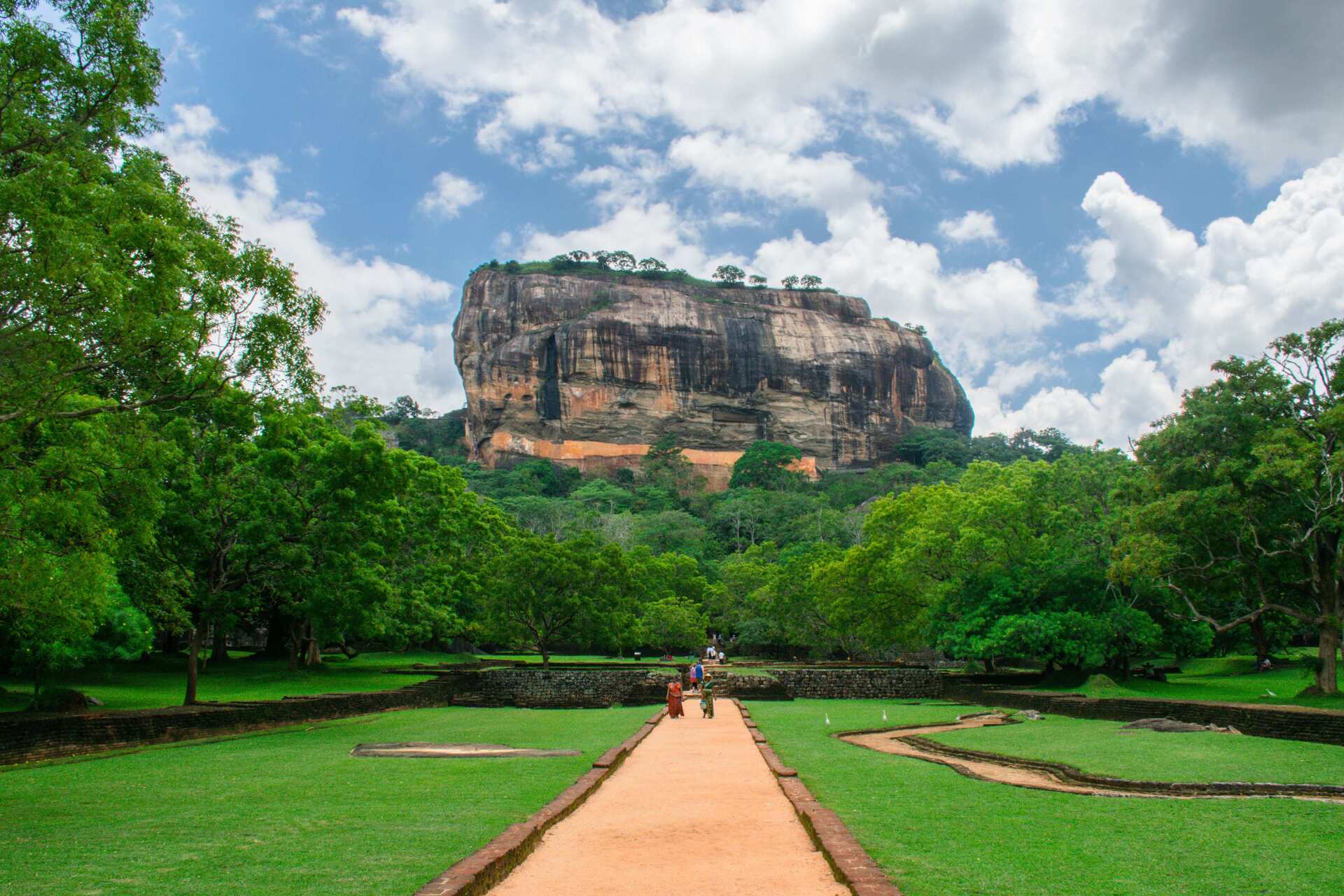
After breakfast, climb Sigiriya Rock itself, also known as Lion Rock. This 5th-century royal fortress rises about 200 metres above the jungle. On the way up you will pass water gardens, the famous painted “Sigiriya maidens”, the Mirror Wall and the giant lion paws at the final staircase. At the top, you can explore the ruins of the king’s palace. Go early, before 8 am if possible, because the rock gets very hot and crowded by mid-morning.
In the afternoon, go on a jeep safari to see wild elephants. Depending on the season, local drivers will take you to Minneriya, Kaudulla or the Hurulu Eco Park, choosing whichever park the elephants are gathering in. From around July to October, Minneriya hosts “The Gathering”, when hundreds of elephants come together near the reservoir.
- Sigiriya Rock: around US$35 for foreign adults (SAARC visitors pay less)
- Pidurangala Rock: around LKR 1,000
- Elephant safari: park fee plus jeep hire; ask your guesthouse to arrange it
Day 4: Polonnaruwa ancient city by bicycle
Polonnaruwa, about an hour from Sigiriya and an underrated stop on any Sri Lanka itinerary, was Sri Lanka’s royal capital in the 11th and 12th centuries. Its ruins are spread over a large, flat area, which makes it perfect to explore by bicycle. Highlights include the Royal Palace, the Vatadage, the Gal Vihara with its four Buddha statues carved into a single granite rock, and the huge Parakrama Samudra reservoir. Rent a bicycle near the entrance and give yourself at least half a day.
Days 5–6: Kandy, the Cultural Capital
Day 5: Spice garden and the Temple of the Tooth
Drive south to Kandy, which takes around two and a half to three hours. On the way, stop at a spice garden near Matale to learn how cinnamon, cardamom, pepper and cloves are grown. Keep in mind that many spice gardens are designed to sell you products at high prices, so enjoy the tour but don’t feel pressured to buy.
Kandy, the next stop on this Sri Lanka itinerary, was the last capital of the Sri Lankan kings and is still the country’s cultural and spiritual heart. In the evening, visit the Temple of the Sacred Tooth Relic (Sri Dalada Maligawa), one of the most important Buddhist sites in the world. It houses a tooth relic of the Buddha, and the evening puja ceremony, with drumming and offerings of flowers, is a powerful experience.
- Temple of the Tooth: LKR 3,000 for most foreign visitors from July 2026 (LKR 2,500 for SAARC, Thailand and Myanmar)
- Tickets: Only buy from the official ticket machines inside the temple. See the official temple FAQ
- Dress code: White or light-coloured clothes are appreciated, with shoulders and knees covered
Day 6: Peradeniya Botanic Gardens, Kandy Lake and a cultural show
Start the day at the Royal Botanic Gardens in Peradeniya, just outside the city. Its giant Java fig tree, orchid house and avenues of royal palms make it one of the most beautiful gardens in Asia. In the afternoon, take a slow walk around Kandy Lake and climb up to the Arthur’s Seat viewpoint or the big white Bahirawakanda Buddha statue for views over the city.
In the evening, watch a Kandyan dance performance. These shows feature traditional drumming, colourful costumes, acrobatic dancers and even fire walking. It is a fun and easy introduction to Sri Lankan culture.
Days 7–9: Hill Country, Nuwara Eliya and Ella
Day 7: The scenic train from Kandy to Nanu Oya
No Sri Lanka itinerary is complete without the famous hill country train ride. From Kandy, the line climbs through tea plantations, waterfalls, pine forests and tiny mountain villages. Today you will ride the first section, from Kandy to Nanu Oya station, which takes around four hours. From Nanu Oya, it is a short tuk-tuk or taxi ride to the town of Nuwara Eliya.
Nuwara Eliya sits at around 1,900 metres above sea level and is often called “Little England” because of its colonial bungalows, rose gardens and cool climate. Visit a working tea factory, such as Pedro Tea Estate or the Mackwoods estate, to see how Ceylon tea is plucked, rolled and dried, then enjoy a fresh cup with a view of the hills. In the evening, it can get cold, so pack a light jacket.
Day 8: Horton Plains and World’s End, then on to Ella
Set your alarm early today. Horton Plains National Park is a high, windswept plateau of grasslands and cloud forest, and its main walking trail is a 9-kilometre loop that takes around three hours. The star of the walk is World’s End, a sheer cliff that drops nearly 900 metres. On a clear morning you can see all the way to the south coast. Clouds usually roll in by 10 am, so aim to start walking as soon as the park opens at 6 am. Along the trail you will also pass the pretty Baker’s Falls.
In the afternoon, continue to Ella by train from Nanu Oya or by road, which takes about two hours. The section of railway between Nanu Oya and Ella is the most spectacular part of the entire line, so try to catch the train if timings allow.
- Horton Plains: around US$25 per foreign adult, plus vehicle fee and taxes
- Best time: Start at 6 am for the clearest views at World’s End
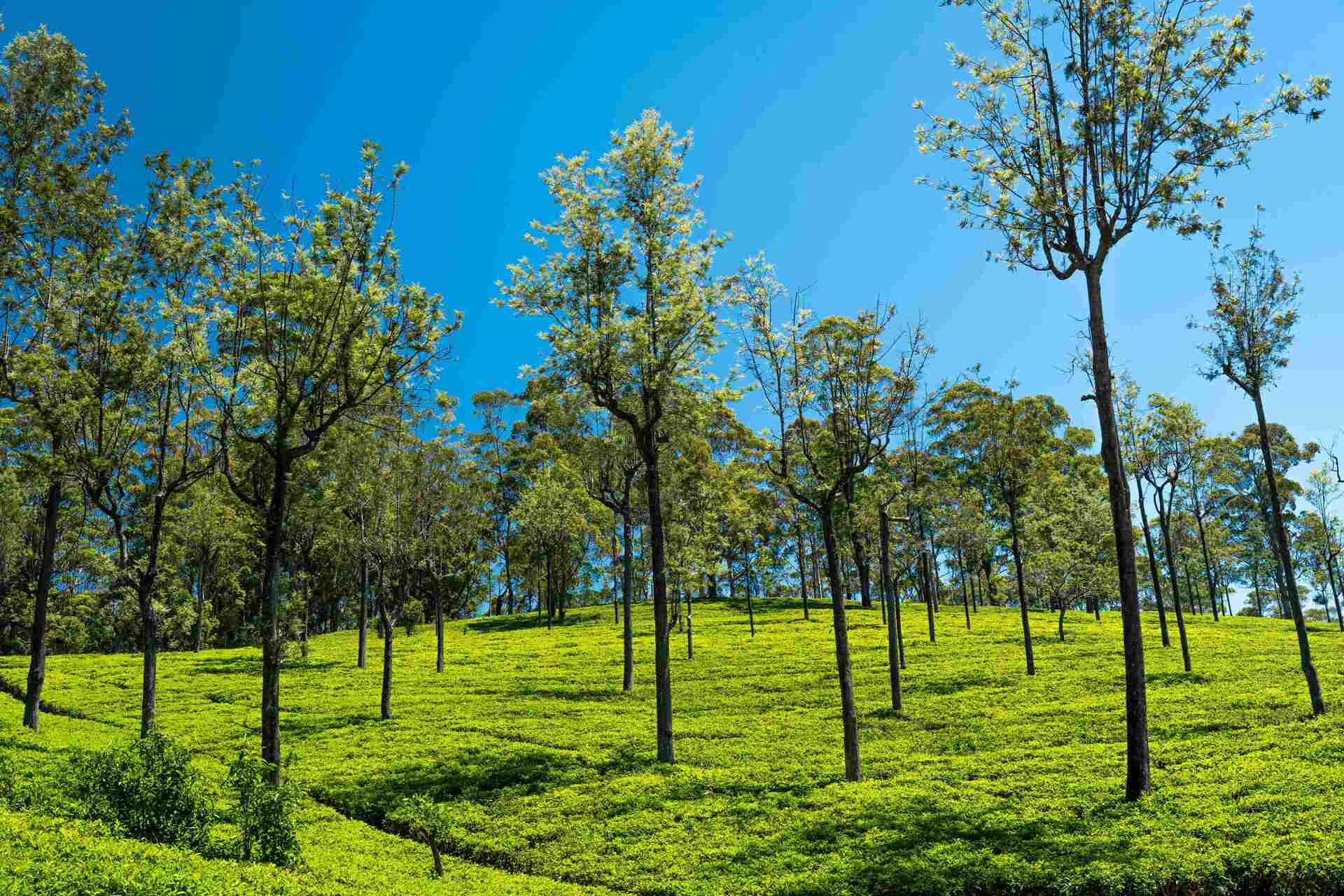 Tea estates cover the hills around Nuwara Eliya and Ella.
Day 9: Ella’s best hikes and the Nine Arch Bridge
Ella, the hill country base of this Sri Lanka itinerary, is a laid-back mountain village full of cafés, yoga studios and viewpoints, and many travellers say it is their favourite place in the whole country. Start with an easy sunrise hike up Little Adam’s Peak, which takes around 45 minutes and offers wide views over the valley.
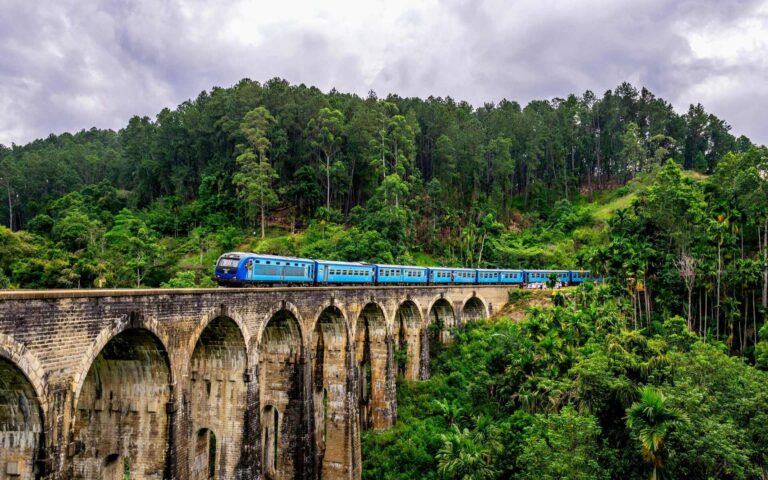
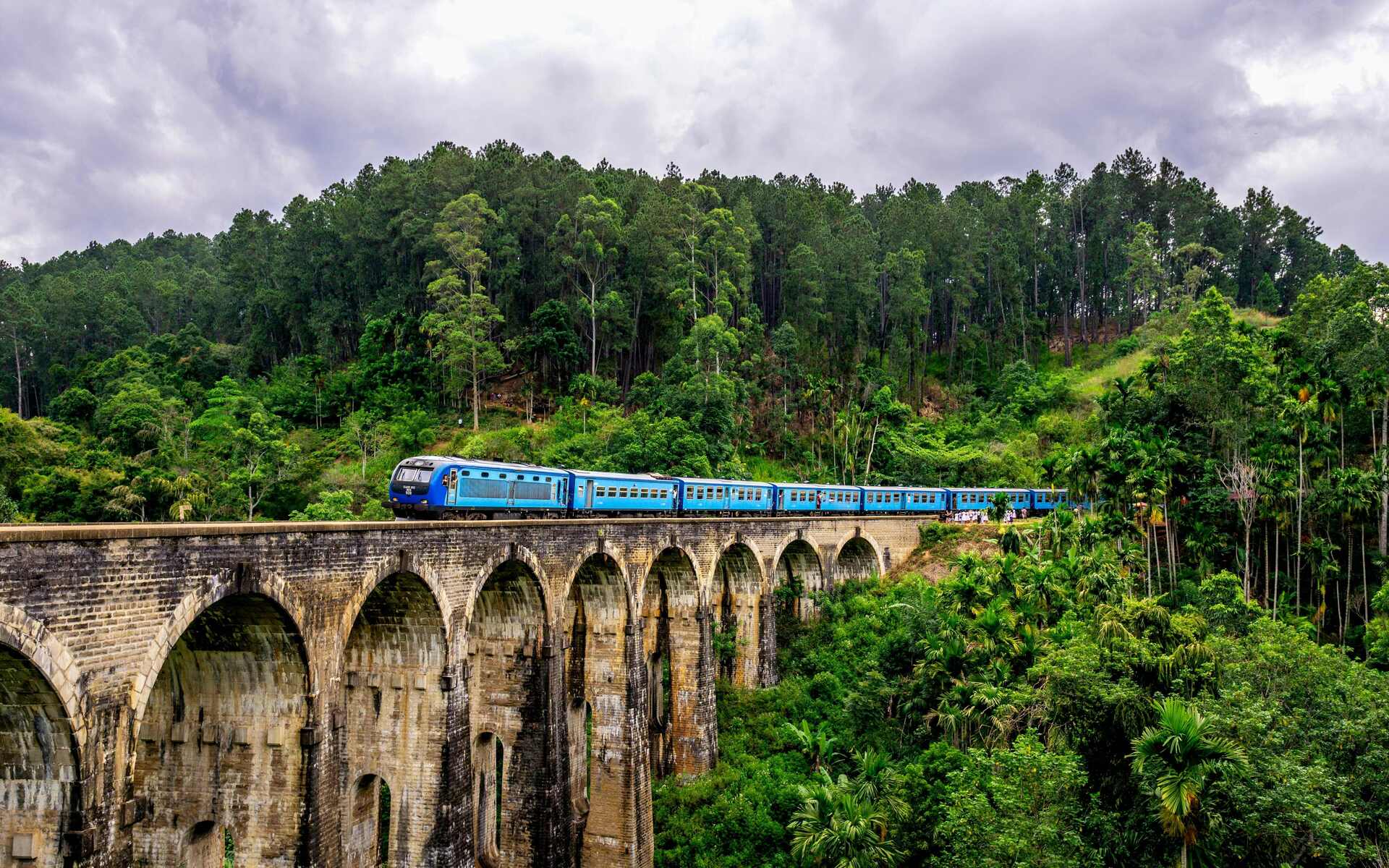
Next, walk to the Nine Arch Bridge, an elegant stone railway bridge built during the British colonial era and surrounded by jungle and tea fields. Check the train timetable with your guesthouse so you can watch a blue train cross the bridge. In the afternoon, visit the Ravana Falls just outside town, or, if you love hiking, take on Ella Rock, a tougher three to four hour return trek with an incredible view from the top.
End the day with a sunset drink at one of the cafés on Ella’s main street, or treat yourself to an Ayurvedic massage.
Day 10: Yala National Park
Drive south from Ella to Tissamaharama, the gateway town to Yala National Park. The journey takes about two and a half hours and passes the beautiful Ella Gap, where the hill country suddenly drops down towards the coastal plains.
Yala is Sri Lanka’s most famous national park, the wildlife highlight of this Sri Lanka itinerary and one of the best places in the world to see leopards in the wild. As well as leopards, you have a good chance of seeing elephants, sloth bears, crocodiles, water buffalo, spotted deer, peacocks and hundreds of bird species. Book an afternoon safari, which usually runs from around 2 pm until the park closes at sunset.
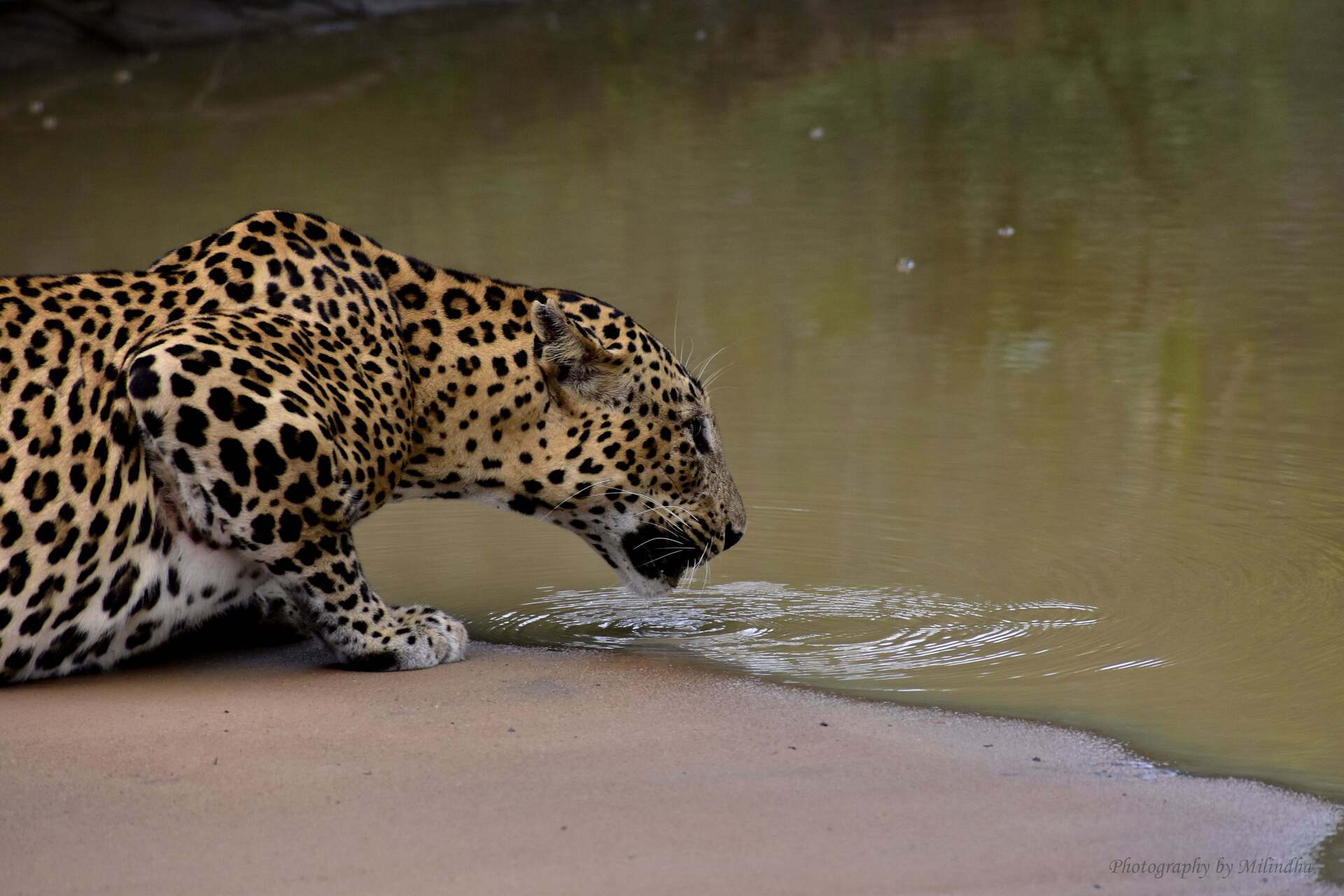
- Park entrance: roughly US$40–45 per foreign adult including taxes and service charges, paid in rupees
- Jeep hire: charged separately, per jeep; a shared jeep is cheaper for solo travellers
- Seasonal closure: Parts of Yala can close temporarily in the dry season (usually September to October). In 2026, Blocks 1 and 2 closed from 14 September to 15 October. Check before you go
Days 11–13: Mirissa and Galle
Day 11: Relax in Mirissa
After a week of temples, trains and hikes, it is time to slow down and enjoy the beach section of your Sri Lanka itinerary. Drive west along the coast to Mirissa, which takes around two hours. This small beach town has a curved bay of golden sand, calm water in the dry season and a relaxed, friendly atmosphere. Spend the afternoon swimming and sunbathing, then walk up to Coconut Tree Hill, one of the most photographed spots in Sri Lanka, for sunset. In the evening, the beach restaurants set up tables on the sand and serve fresh seafood.
Day 12: Whale watching and a surf lesson
Mirissa is one of the best places on Earth to see blue whales, the largest animals that have ever lived. Whale-watching boats leave the harbour early, around 6:30 am, and trips last four to five hours. The season runs from November to April, with December to March usually offering the calmest seas and best sightings. You may also see sperm whales, spinner dolphins and sea turtles.
In the afternoon, head to nearby Weligama for a beginner surf lesson. Its long, gentle waves are perfect for learning. On the drive back, look out for the traditional stilt fishermen near Koggala, who balance on wooden poles in the water.
- Whale watching: roughly US$40–70 per person on a standard boat, depending on the operator
- Season: November to April (boats generally don’t run from May to October)
- Tip: Choose an operator that follows responsible whale-watching guidelines and doesn’t crowd the animals
Day 13: Galle Fort, Unawatuna and Jungle Beach
The historic city of Galle is just 45 minutes from Mirissa and makes a perfect final stop on a Sri Lanka itinerary. Galle Fort, a UNESCO World Heritage Site, was first built by the Portuguese in the 16th century and greatly expanded by the Dutch. Inside its thick ramparts you will find cobbled streets, colonial villas, churches, mosques, boutique shops, art galleries and some of the best cafés in the country. Walk along the walls to the lighthouse, and stay for sunset at Flag Rock.
In the afternoon, visit Unawatuna Beach or the small, sheltered Jungle Beach, which is great for snorkelling. The Japanese Peace Pagoda on Rumassala Hill is close by and offers lovely views over the bay.
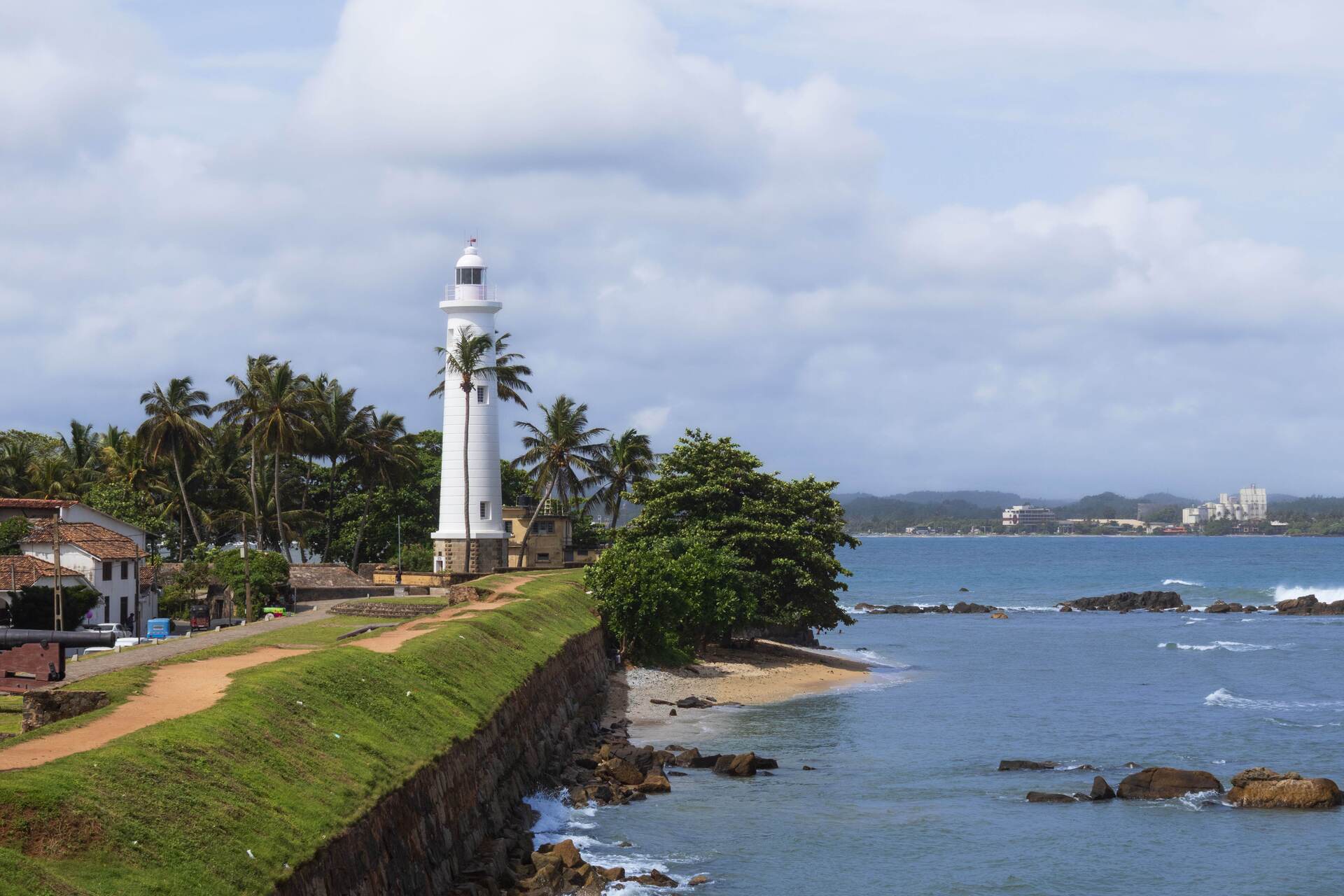
Day 14: Colombo and Departure
On your final day, take the Southern Expressway to Colombo, which takes around two hours. If your flight is in the evening, spend a few hours exploring the capital. Visit the Gangaramaya Temple, a fascinating mix of architectural styles and collections, then walk through the colourful chaos of the Pettah Market. Finish at Galle Face Green, a seaside promenade where local families gather at sunset to fly kites and eat street food such as isso wade (prawn fritters).
The airport is about an hour from central Colombo, depending on traffic, so allow plenty of time. That completes your 14-day Sri Lanka itinerary.
How Much Does 2 Weeks in Sri Lanka Cost?
A Sri Lanka itinerary can suit almost any budget. The table below shows rough daily costs per person, not including international flights. These are estimates based on typical 2026 prices, and they will vary with the season and your travel style.
| Travel style | Per day (approx.) | What you get |
|---|---|---|
| Budget | US$30–50 | Guesthouses and hostels, local food, public buses and trains |
| Mid-range | US$80–150 | Boutique hotels, private driver for part of the trip, restaurant meals |
| Luxury | US$250+ | Five-star resorts, private driver-guide, safari lodges |
Entrance fees on this Sri Lanka itinerary
Entrance fees for foreigners are much higher than for locals, so add them to your budget. Approximate prices for foreign adults in late 2026 are:
| Attraction | Approx. price (foreign adult) |
|---|---|
| Sigiriya Rock Fortress | US$35 |
| Pidurangala Rock | LKR 1,000 |
| Dambulla Cave Temple | LKR 2,000 |
| Temple of the Tooth, Kandy | LKR 3,000 |
| Horton Plains National Park | US$25 + taxes and vehicle fee |
| Yala National Park | US$40–45 incl. taxes (jeep extra) |
| Whale watching, Mirissa | US$40–70 |
| Galle Fort, Nine Arch Bridge, Little Adam’s Peak | Free |
Visitors from SAARC countries pay reduced prices at many sites, and children usually pay less. Fees can change at short notice, so check them again before you travel.
Getting Around Sri Lanka
How you travel will shape your Sri Lanka itinerary more than anything else. Here are the main options:
- Private driver: The most popular option for first-time visitors. A driver picks you up at the airport and stays with you for the whole trip. It is comfortable, flexible and saves a lot of time, especially if you are a family or group. Many travellers use a driver for the Cultural Triangle and the south coast, and take the train through the hill country.
- Train: Cheap, scenic and a true highlight, especially between Kandy and Ella. Trains are slower than roads and can run late, so don’t plan tight connections.
- Bus: Very cheap and goes almost everywhere, but buses are crowded and drivers are famously fast. Best for budget travellers with light bags.
- Tuk-tuk: Perfect for short trips around town. Use the PickMe or Uber apps for fair, fixed prices, or agree on a price before you get in a street tuk-tuk.
- Self-drive: Renting a tuk-tuk or scooter is possible, but road conditions and traffic can be challenging. It is only recommended for confident, experienced drivers with the right licence.
Sri Lankan Food You Must Try
Sri Lankan food is one of the best surprises of any trip to the island. It is full of flavour, often spicy, and built around rice, coconut and fresh vegetables. Make sure you try these dishes during your 2 weeks in Sri Lanka:
- Rice and curry: The national meal. A plate of rice comes with several small curries made from vegetables, lentils, fish or chicken, plus pol sambol (spicy coconut relish) and papadam.
- Kottu roti: Chopped flatbread stir-fried with vegetables, egg and meat on a hot iron plate. You will hear the rhythmic clanging of kottu being made on every street at night.
- Hoppers (appa): Bowl-shaped pancakes made from rice flour and coconut milk, crispy at the edges and soft in the middle. Try an egg hopper for breakfast.
- String hoppers (idiyappam): Steamed nests of rice noodles, usually eaten with a mild coconut gravy called kiri hodi and dhal curry.
- Lamprais: A Dutch Burgher dish of rice, meat curry and sides baked together in a banana leaf.
- Kiribath: Milk rice cut into diamond shapes, traditionally eaten on special occasions with lunu miris (a spicy onion sambol).
- Drinks: Fresh king coconut water (thambili), wood apple juice and, of course, a cup of world-famous Ceylon tea.
Local Tips, Culture and Safety
Sri Lankans are warm, welcoming and proud of their country. A little cultural awareness will make your trip smoother and help you connect with the people you meet along your Sri Lanka itinerary.
Respect at religious sites
- Cover your shoulders and knees at temples, and remove your shoes and hat before entering.
- Never pose for a photo with your back to a Buddha statue, and don’t touch or climb on statues.
- Tattoos of the Buddha can cause serious offence, and some visitors with them have been refused entry or deported. Keep any religious tattoos covered.
- Don’t point your feet towards a Buddha image or a monk.
Everyday etiquette
- Use your right hand to eat, give and receive things.
- A side-to-side head wobble often means “yes” or “okay”, not “no”.
- Public displays of affection are frowned upon outside tourist areas.
- Tipping is appreciated. Around 10% is normal in restaurants that don’t already add a service charge.
Safety and health
- Water: Avoid tap water. Drink bottled or filtered water and carry a reusable bottle.
- Sun and heat: Use high-factor sunscreen and drink plenty of fluids, especially when climbing Sigiriya.
- Mosquitoes: Dengue fever exists in Sri Lanka, so use insect repellent, particularly at dawn and dusk.
- Sea safety: Strong currents are common on some beaches. Swim only where locals swim and obey red flags.
- Scams: Be wary of friendly strangers who offer to take you to a “special festival” or “government gem shop”. Use apps for transport and only buy tickets from official counters.
- Travel insurance: Always travel with insurance that covers medical treatment and activities like hiking and surfing.
How to Customise This Sri Lanka Itinerary
Every traveller is different, so feel free to adjust this Sri Lanka itinerary to suit your pace.
- Only have 10 days? Skip Polonnaruwa and Nuwara Eliya, and go straight from Kandy to Ella by train. Spend just one night in Mirissa before finishing in Galle.
- Have 3 weeks? Add the ancient city of Anuradhapura, the east coast beaches of Trincomalee or Arugam Bay, and a few more days of beach time in Tangalle.
- Travelling with kids? Replace Ella Rock with the easier Little Adam’s Peak, spend more time at the beach, and consider Udawalawe National Park instead of Yala. Udawalawe is known for its large herds of elephants and an elephant transit home that cares for orphaned calves.
- Love wildlife? Add Wilpattu National Park, Sri Lanka’s largest park, or Kumana National Park for birdwatching.
Sri Lanka is growing fast as a destination. The island welcomed a record of more than 2.3 million tourists in 2025, and arrivals in 2026 are on track to be just as strong. If you are still deciding where to go next, read our guide to the 10 best countries to travel in 2027, where Sri Lanka ranks in the top three.
Frequently Asked Questions
Is 2 weeks enough for a Sri Lanka itinerary?
Yes. Two weeks is the ideal length for a first Sri Lanka itinerary. It gives you enough time to see the Cultural Triangle, Kandy, the hill country, a national park and the south coast without rushing.
What is the best month to visit Sri Lanka?
December to April is the best time for the classic Sri Lanka itinerary covering the west coast, south coast and hill country. If you want to focus on the east coast, visit between May and September.
Do I need a visa for Sri Lanka?
Most visitors need an Electronic Travel Authorization (ETA). Since 25 May 2026, citizens of 40 countries, including the UK, USA, India, Australia, China and much of Europe, can get a free 30-day tourist ETA. Other nationalities pay a fee. Always apply on the official website, eta.gov.lk.
How much does 2 weeks in Sri Lanka cost?
A budget traveller can spend around 30 to 50 US dollars per day, a mid-range traveller around 80 to 150 US dollars per day, and a luxury traveller 250 US dollars or more per day. Entrance fees for major sites like Sigiriya and Yala are an extra cost to plan for.
Is Sri Lanka safe for tourists?
Sri Lanka is generally considered safe for tourists, including solo and female travellers. Use common sense, agree on tuk-tuk prices before you ride or use an app like PickMe, and dress respectfully at religious sites.
Can I drink tap water in Sri Lanka?
It is best to avoid drinking tap water in Sri Lanka. Drink bottled or filtered water, and carry a reusable bottle that you can refill at hotels and guesthouses.
Final Thoughts on Your Sri Lanka Itinerary
In just two weeks, this Sri Lanka itinerary takes you from ancient kingdoms and sacred temples to cool tea country, wild jungles and tropical beaches. Few countries let you experience so much in such a short time, and fewer still welcome you with the warmth and kindness that Sri Lankans are known for.
Use this route as your starting point, adjust it to your own pace, and remember to book trains, safaris and whale-watching trips early if you are travelling in peak season. For official tourism information, visit Sri Lanka Tourism.
Have you been to Sri Lanka, or are you planning your first trip? Share your questions in the comments below, and explore more travel guides on Daily Leaflet. Ayubowan, and enjoy the island!
Image Credits & Sources
- Nine Arch Bridge: Photo by Hendrik Cornelissen on Pexels
- Rock Formation: Photo by Ákos Helgert on Pexels
- Tea Plantation: Photo by Thilina Alagiyawanna on Pexels
- Sri Lankan Leopard: Photo by Janith Madhusanka on Pexels
- Galle Lighthouse: Photo by Ceylon Frames on Pexels
About the Author