Crochet for Beginners: Everything You Need to Get Started (Step-by-Step Guide)
Daily Leaflet
18 minutes readCrochet is having a huge moment. Searches for crochet climb every autumn and winter, granny squares and handmade bags are all over social media, and people of every age are picking up a hook to make something with their own hands. The best part? Crochet is cheap to start, easy to learn and needs nothing more than a hook and a ball of yarn.
If you have always wanted to try it but did not know where to begin, this guide to crochet for beginners will take you from complete beginner to finishing your first project. You will learn exactly what to buy, how to hold your hook, the six basic stitches step by step, how to read a pattern, and which easy projects to make first, plus the common mistakes every beginner makes and how to fix them.
- Buy: one 5.5 mm (US I-9) hook and one ball of smooth, light-coloured medium (#4, worsted) weight yarn.
- Also useful: small scissors, a tapestry needle and a few stitch markers.
- Learn in this order: slip knot, chain, single crochet, half double crochet, double crochet.
- First project: a simple square dishcloth or a scarf made with one stitch.
- Practice: 15 to 20 minutes a day. Most beginners feel comfortable within a couple of weeks.
What Is Crochet?
Crochet is a way of making fabric by pulling loops of yarn through other loops using a single hook. The name comes from the French word crochet, meaning "small hook". Every crochet stitch is built from the same simple movement: you wrap the yarn around the hook and pull it through one or more loops. Combine a handful of basic stitches in different ways, and you can make anything from blankets and scarves to bags, toys, clothes and home decor.
Crochet became especially popular in Europe in the 19th century, when lace-like crochet was used to decorate clothing and homes. In Ireland, crochet lace became an important source of income for many families during the Great Famine of the 1840s. Today, crochet is enjoying a new wave of popularity thanks to social media, a love of handmade fashion and the search for relaxing, screen-free hobbies.
Crochet vs knitting: what is the difference?
People often confuse the two crafts, but they work very differently. If you are deciding which to learn first, this comparison will help.
| Crochet | Knitting | |
|---|---|---|
| Tools | One hook | Two needles (or a circular needle) |
| Live stitches | Usually only one loop on the hook at a time | Many live stitches on the needle |
| Fixing mistakes | Easy: just pull the yarn back to the mistake | Harder: dropped stitches can unravel |
| Fabric | Thicker, more textured and structured | Thinner, stretchier and smoother |
| Best for | Bags, blankets, toys, granny squares, home decor | Jumpers, socks, fine stretchy garments |
| Speed | Generally faster to grow fabric | Generally slower |
Many people find crochet for beginners easier than knitting, because there is only one tool and one active loop to worry about, and mistakes are quick to undo.
What You Need to Start Crocheting
One of the best things about crochet for beginners is how little you need to buy. You can start for the price of a coffee and a cake.
1. A crochet hook
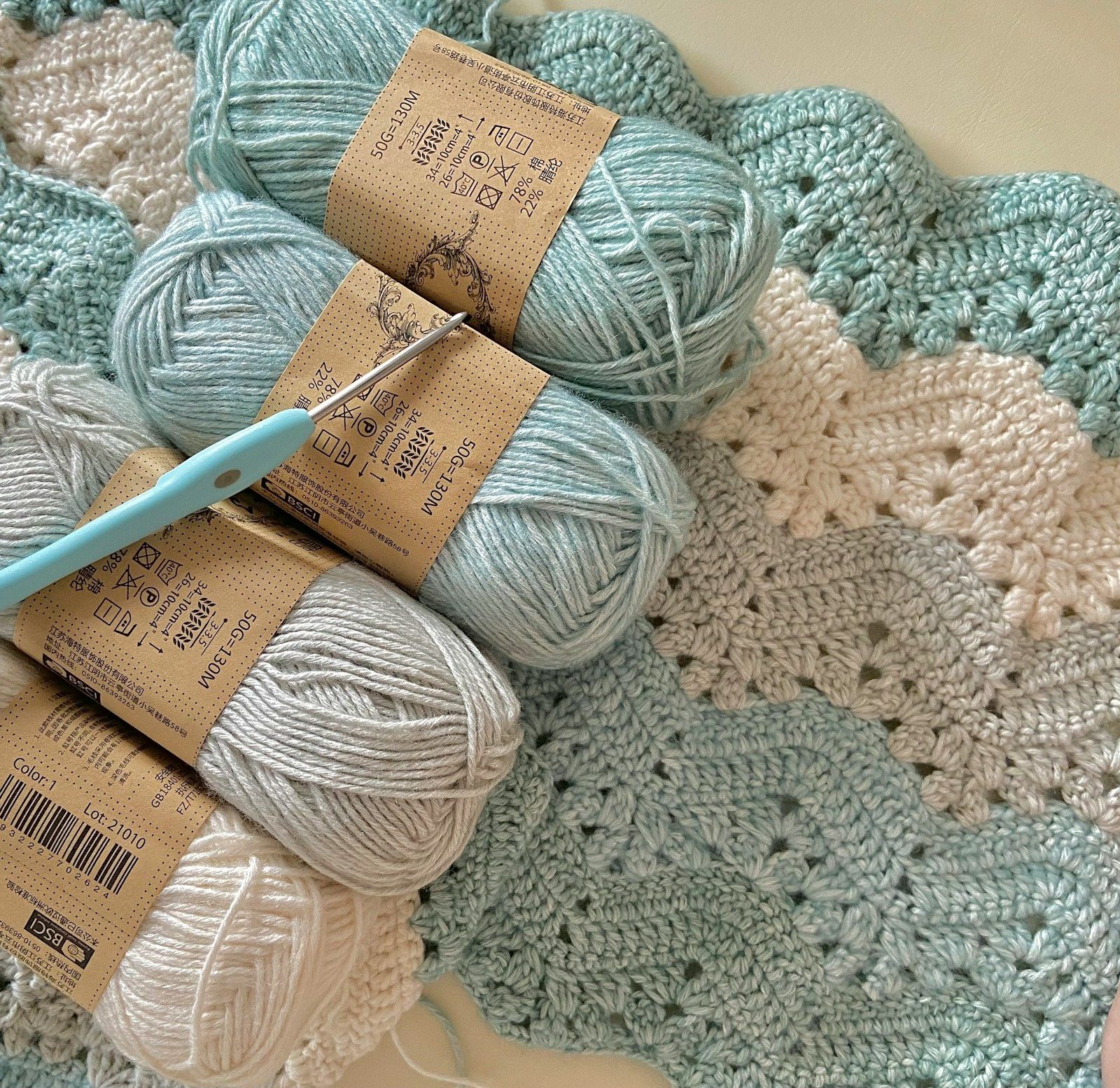
Hooks come in many sizes, shown in millimetres (mm) and, in the United States, often with a letter and number too, such as "I-9". For crochet for beginners, the best choice is a 5.5 mm (US I-9) hook to match medium-weight yarn. Hooks are usually made from aluminium, plastic, bamboo or wood. Aluminium hooks are cheap and smooth, while ergonomic hooks with soft rubber handles are more comfortable if you crochet for long periods or have sore hands.
2. Yarn
For crochet for beginners, choose a medium (#4) weight yarn, often called worsted or aran weight. It is thick enough to see your stitches clearly but not so bulky that it is hard to handle. For your first project:
- Pick a light colour. It is much easier to see your stitches on cream, pastel or bright yarn than on black or navy.
- Choose smooth yarn. Avoid fluffy, hairy or textured yarns such as mohair, eyelash or chenille until you have more experience.
- Acrylic or cotton are great choices. Acrylic is cheap, soft and easy to wash. Cotton is perfect for dishcloths and market bags, although it has less stretch.
3. Small extras
- Scissors: any small sharp pair will do.
- Tapestry needle: a large, blunt needle for weaving in the yarn ends when you finish.
- Stitch markers: small clips that mark the first and last stitch of a row, or the start of a round. A paper clip or a piece of contrasting yarn works too.
- Measuring tape: useful for checking sizes and gauge.
Yarn Weights and Hook Sizes Explained
Yarn comes in different thicknesses, called weights. The Craft Yarn Council's Standard Yarn Weight System groups them into eight categories, numbered 0 to 7, and recommends a hook size for each. You will see these numbers on most yarn labels.
| Number | Name | Common uses | Recommended hook |
|---|---|---|---|
| 0 | Lace | Doilies, fine lace | Steel hooks, or 2.25 mm (US B-1) |
| 1 | Super fine (fingering, sock) | Socks, baby items, lightweight shawls | 2.25–3.5 mm (US B-1 to E-4) |
| 2 | Fine (sport) | Baby clothes, light garments | 3.5–4.5 mm (US E-4 to 7) |
| 3 | Light (DK) | Tops, scarves, lightweight blankets | 4.5–5.5 mm (US 7 to I-9) |
| 4 | Medium (worsted, aran) | Best for beginners: blankets, hats, scarves, dishcloths | 5.5–6.5 mm (US I-9 to K-10½) |
| 5 | Bulky (chunky) | Cosy scarves, quick blankets, rugs | 6.5–9 mm (US K-10½ to M-13) |
| 6 | Super bulky | Very chunky throws and cowls | 9–15 mm (US M-13 to Q) |
| 7 | Jumbo | Giant blankets, arm-knit style projects | 15 mm and larger (US Q and larger) |
These are guidelines, not strict rules. If you crochet tightly, you may want a slightly larger hook, and if you crochet loosely, a slightly smaller one. When you follow a pattern, always use the hook and yarn weight it recommends.
How to Hold the Hook and Yarn
Holding the hook comfortably is the first real skill in crochet for beginners. There is no single correct way to hold it, but most people use one of two grips:
- Pencil grip: hold the hook like a pencil, between your thumb and index finger, resting on your middle finger.
- Knife grip: hold the hook from above, like a knife you are using to cut food, with the handle under your palm.
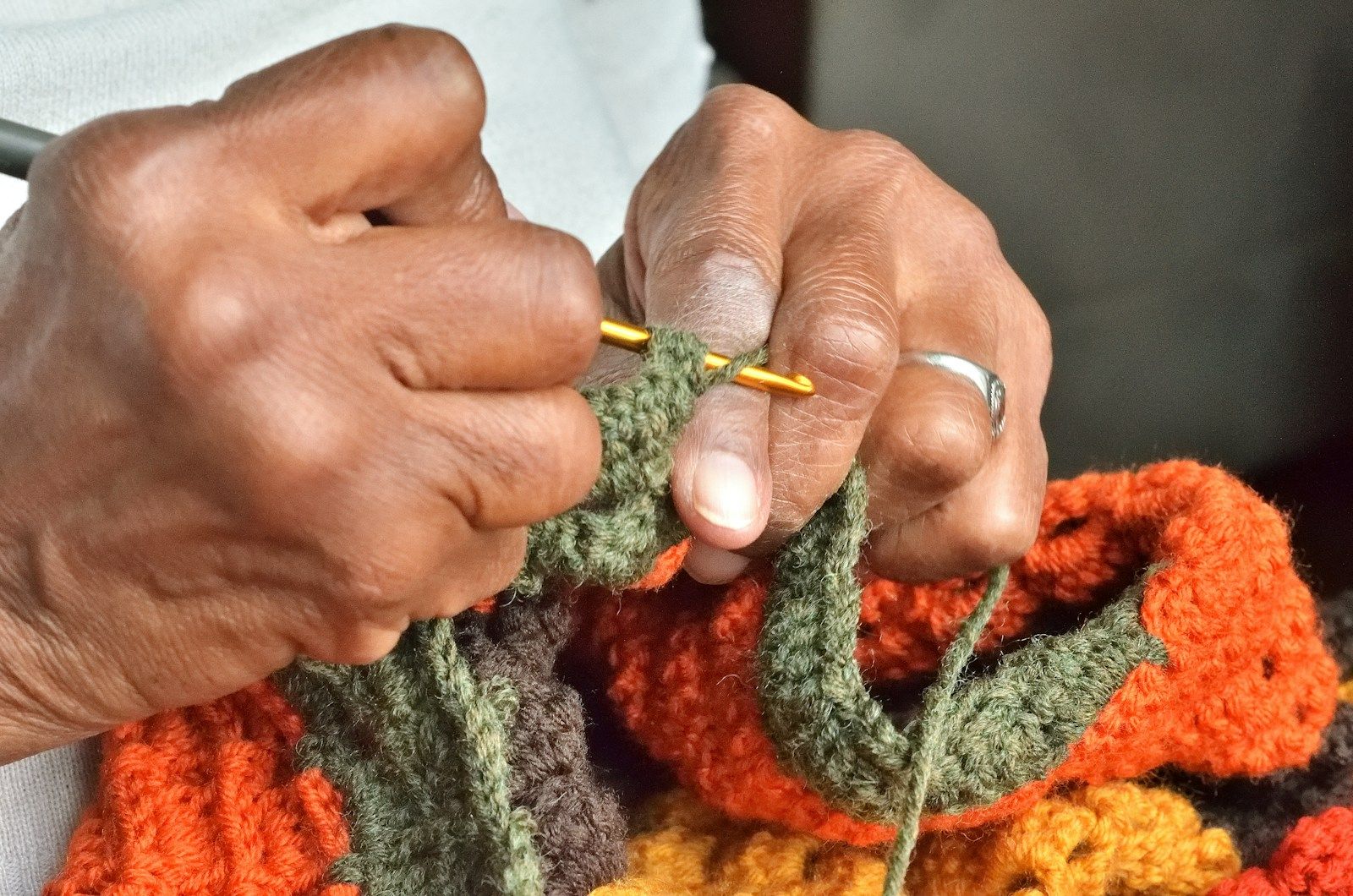
Try both and choose whichever feels more natural. Your other hand holds the yarn and the work. Most crocheters wrap the yarn coming from the ball around their little finger and over their index finger. This creates gentle tension, so the yarn feeds smoothly onto the hook. Do not worry if it feels awkward at first. Holding the yarn is the part that takes the longest to feel natural, and it gets easier with every row.
The 6 Basic Crochet Stitches
Almost every crochet pattern in the world is built from a small set of basic stitches. Learn these six, in this order, and you will have mastered the core of crochet for beginners and be able to make most beginner patterns. Each stitch is taller than the one before it.
1. Slip knot
The slip knot attaches the yarn to your hook. It is the first step of almost every project.
- Make a loop with the yarn, crossing the tail end behind the working yarn (the end attached to the ball).
- Push a little of the working yarn through the loop from behind to form a new loop.
- Place this new loop on your hook and gently pull both ends to tighten it, not too tight, so it can still slide.
2. Chain stitch (ch)
The chain is the foundation of most projects. A row of chains, called the foundation chain, is what you work your first row of stitches into.
- With the slip knot on your hook, wrap the yarn over the hook from back to front. This is called a "yarn over" (yo).
- Pull the yarn through the loop on your hook. That is one chain.
- Repeat until you have the number of chains your pattern asks for. Try to keep them all the same size.
3. Slip stitch (sl st)
The slip stitch is the shortest stitch. It is used to join rounds, move across stitches without adding height, and create neat edges.
- Insert the hook into the next stitch.
- Yarn over and pull the yarn through the stitch and the loop on your hook in one movement.
4. Single crochet (sc)
Single crochet is the most important stitch in crochet for beginners. It creates a firm, dense fabric that is perfect for dishcloths, amigurumi toys and bags.
- Insert the hook into the next stitch (on your first row, the second chain from the hook).
- Yarn over and pull up a loop. You now have two loops on your hook.
- Yarn over again and pull through both loops. One single crochet is complete.
5. Half double crochet (hdc)
The half double crochet sits between single and double crochet in height. It works up quickly and makes a soft, warm fabric, which is ideal for hats and scarves.
- Yarn over before inserting the hook into the next stitch.
- Insert the hook, yarn over and pull up a loop. You now have three loops on your hook.
- Yarn over and pull through all three loops at once.
6. Double crochet (dc)
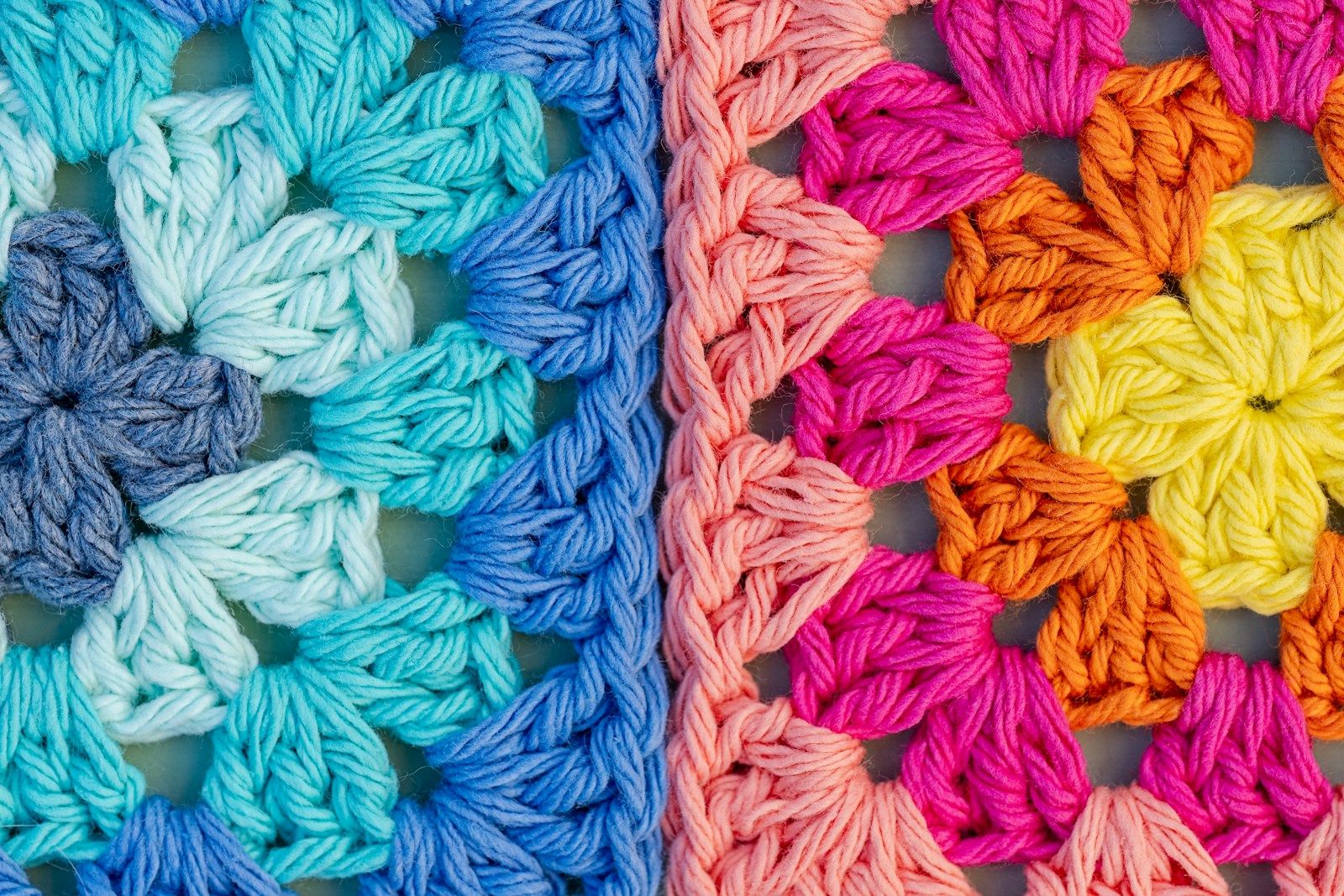
The double crochet is a tall stitch that creates an open, flexible fabric and grows quickly. It is the stitch used in classic granny squares.
- Yarn over and insert the hook into the next stitch.
- Yarn over and pull up a loop. You now have three loops on your hook.
- Yarn over and pull through the first two loops. Two loops remain.
- Yarn over and pull through the last two loops.
Once you are comfortable with these, the treble crochet (tr) works the same way as a double crochet, but you wrap the yarn over twice before inserting the hook, then work off the loops two at a time.
Turning chains
When you reach the end of a row and turn your work, you need to make a few chains to bring your yarn up to the height of the next row. This is called a turning chain. As a general guide, use 1 chain for single crochet, 2 chains for half double crochet and 3 chains for double crochet. Always follow your pattern, though, because designers sometimes handle turning chains differently.
Working in Rows vs Working in the Round
There are two main ways to build crochet fabric:
- In rows: you work back and forth, turning at the end of each row. This is how you make flat pieces such as dishcloths, scarves and blankets.
- In the round: you work in circles or spirals, starting from the centre. This is how you make hats, granny squares, coasters and amigurumi toys.
To start working in the round, you can either chain a few stitches and join them into a ring with a slip stitch, or use a magic ring (also called a magic circle). A magic ring is an adjustable loop that you work your first stitches into and then pull tight, leaving no hole in the middle. It takes a little practice, but it is one of the most useful techniques in crochet for beginners who want to make hats or toys.
How to Read a Crochet Pattern
For many people, reading patterns is the hardest part of crochet for beginners. They look like a secret code at first, but they use a small set of standard abbreviations. Once you learn them, you will be able to follow thousands of free patterns online.
| Abbreviation | Meaning |
|---|---|
| ch | chain |
| sl st | slip stitch |
| sc | single crochet |
| hdc | half double crochet |
| dc | double crochet |
| tr | treble crochet |
| st(s) | stitch(es) |
| yo | yarn over |
| sk | skip |
| rep | repeat |
| inc / dec | increase (two stitches in one) / decrease (two stitches together) |
| * ... * | repeat the instructions between the asterisks |
| ( ) or [ ] | work all the instructions inside the brackets in the same stitch or space |
For example, "Row 2: ch 1, sc in each st across, turn (20 sts)" means: make one chain, work a single crochet into every stitch of the row, turn your work, and check that you have 20 stitches.
US vs UK crochet terms
This catches out almost everyone learning crochet for beginners. American and British patterns use the same names for different stitches. Always check which terms a pattern uses before you start.
| US term | UK term |
|---|---|
| Slip stitch (sl st) | Slip stitch (ss) |
| Single crochet (sc) | Double crochet (dc) |
| Half double crochet (hdc) | Half treble crochet (htr) |
| Double crochet (dc) | Treble crochet (tr) |
| Treble crochet (tr) | Double treble crochet (dtr) |
This guide uses US terms. A quick way to tell which terms a pattern uses: UK patterns never mention "single crochet".
What is gauge?
Gauge (called tension in the UK) is the number of stitches and rows in a set measurement, usually 10 cm or 4 inches. It matters most for things that need to fit, such as hats and clothes. To check it, make a small test square called a swatch and measure it. If you have more stitches than the pattern says, try a bigger hook. If you have fewer, try a smaller hook. For blankets, scarves and dishcloths, gauge is much less important.
Crochet for Beginners: A 7-Day Practice Plan
Not sure how to structure your first week? Follow this simple plan. Each session takes about 20 minutes.
| Day | What to practise |
|---|---|
| Day 1 | Slip knot and a chain of 30. Pull it out and repeat until your chains look even. |
| Day 2 | Chain 20 and work rows of single crochet. Count your stitches at the end of every row. |
| Day 3 | Keep going with single crochet until your square is about 15 cm (6 inches) long. |
| Day 4 | Start a new swatch in half double crochet. |
| Day 5 | Try a swatch in double crochet and practise your turning chains. |
| Day 6 | Practise the magic ring and a few rounds of single crochet in a circle. |
| Day 7 | Start your first real project: a dishcloth or scarf in your favourite stitch. |
By the end of the week, you will know the basics of crochet for beginners and be ready to follow a simple pattern.
Easy Crochet Projects for Beginners
The best first projects in crochet for beginners are small, flat and use just one or two stitches. These ideas move from easiest to slightly more challenging, and several of them are among the most popular crochet trends right now.
- Dishcloth or washcloth: A small square of single or half double crochet in cotton yarn. Quick, useful and perfect for practising even edges.
- Simple scarf: A long rectangle in one stitch, with medium or bulky yarn. Great for getting into a rhythm.
- Coasters: Tiny projects worked in rows or in the round, ideal for practising the magic ring.
- Granny squares: The classic crochet motif, built from clusters of double crochet. Make a few and join them into a cushion cover, a tote bag or eventually a whole blanket.
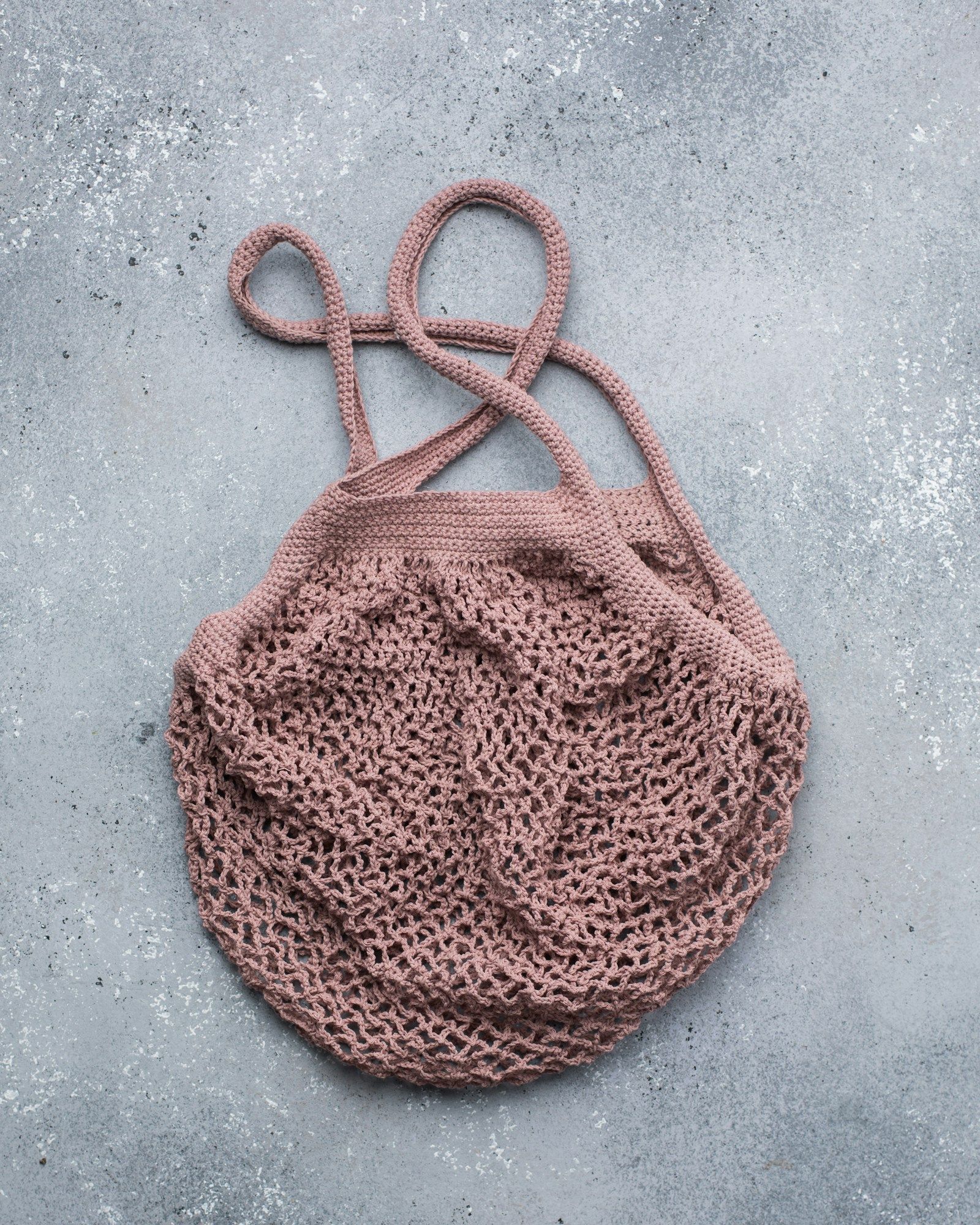
- Market or net bag: One of the biggest trends in crochet. Open mesh bags use simple chains and double crochet and can often be finished in an afternoon or two.
- Beanie hat: A great introduction to working in the round and to increasing.
- Bucket hat: A trendy next step once you are comfortable with hats.
- Amigurumi: Small stuffed toys, made in tight spirals of single crochet. They take patience, but they are hugely popular and make wonderful gifts.
Common Beginner Mistakes (and How to Fix Them)
Every crocheter has made these mistakes while learning crochet for beginners. Knowing about them in advance will save you a lot of frustration.
- Crocheting too tightly: If it is hard to push your hook into the stitches, relax your grip and loosen the yarn in your other hand. Make your loops on the thick part of the hook, not the narrow throat.
- Edges that get wider or narrower: This happens when you accidentally add or skip stitches at the start or end of a row. Count your stitches after every row, and put a stitch marker in the first and last stitch.
- Forgetting the turning chain: Without it, the ends of your rows will look squashed. Make the turning chain every time you turn.
- Working into the wrong loop: Unless the pattern says otherwise, insert your hook under both loops at the top of each stitch.
- Splitting the yarn: If your hook catches only part of the yarn, slow down and turn the hook slightly downward as you pull through.
- Being afraid to undo work: Pulling your stitches out to fix a mistake is called "frogging" (because you "rip it, rip it"). Because crochet has only one live loop, undoing is quick and easy. Do not be afraid of it.
How to Keep Learning
Once you have learned the basics of crochet for beginners, there is a whole world of crochet to explore. Here are the best ways to keep improving:
- Video tutorials: Watching someone's hands is often the fastest way to understand a stitch. Search for the stitch name plus "for beginners", and choose slow, close-up videos.
- Free patterns: Pattern websites and online crochet communities have thousands of free beginner patterns, with photos and reviews from other makers.
- Local yarn shops and libraries: Many run beginner classes and friendly crochet groups where you can ask questions in person.
- Practise little and often: 15 to 20 minutes a day is more effective than one long session a week.
- Learn one new skill per project: A new stitch, colour changes, working in the round or joining squares. Each project builds on the last.
Many people also find crochet a great way to relax. The repetitive movements and the focus on a simple task can be calming, and it is a lovely way to spend time away from screens. If you are looking for more ways to build healthy daily habits, read our guide on how to build a morning routine that sticks, and crochet makes a perfect, portable hobby to take on your travels with our ultimate travel packing list.
Frequently Asked Questions
Is crochet easy to learn for beginners?
Yes. Crochet for beginners is one of the easiest crafts to start, because you only need one hook and one active loop, and mistakes are easy to undo. Most beginners can make a simple dishcloth or scarf within their first week of practice.
What size crochet hook should a beginner use?
A 5.5 mm (US I-9) hook paired with medium (#4, worsted) weight yarn is a great choice for crochet for beginners. It is a comfortable size to hold, and your stitches will be easy to see.
What is the best yarn for beginners?
Choose a smooth, light-coloured medium (#4) weight yarn in acrylic or cotton. Avoid dark colours and fluffy or textured yarns until you are more confident.
How long does it take to learn crochet?
You can learn the basic stitches of crochet for beginners in a few hours. With 15 to 20 minutes of practice a day, most people feel comfortable within a couple of weeks and can tackle projects like hats and granny squares within a month or two.
Is crochet easier than knitting?
Many people find crochet easier to start, because it uses one hook instead of two needles and mistakes are simpler to fix. Knitting and crochet produce different types of fabric, though, so many crafters eventually learn both.
What should I crochet first?
In crochet for beginners, start with a small, flat project that uses one stitch, such as a dishcloth, coasters or a simple scarf. Once you are comfortable, try granny squares, a beanie or a trendy net bag.
Final Thoughts
Learning to crochet is one of the most rewarding hobbies you can start, and it costs very little to try. With a single hook, a ball of yarn and the six basic stitches in this guide to crochet for beginners, you have everything you need to make your first dishcloth, scarf or granny square. Be patient with yourself, count your stitches, and enjoy the process. Before long, you will be making gifts, bags and blankets you are proud of.
What will your first crochet project be? Share it in the comments below, and explore more lifestyle guides on Daily Leaflet.
Image credits
- Hands crocheting: Photo by Ahmet Ayar on Unsplash
- Yarn and crochet hook: Photo by Joy Ru on Unsplash
- Granny squares: Photo by Cary Bates on Unsplash
- Crochet bag: Photo by Anna Tukhfatullina on Unsplash